Basic Network Administration
Basic Network Administration
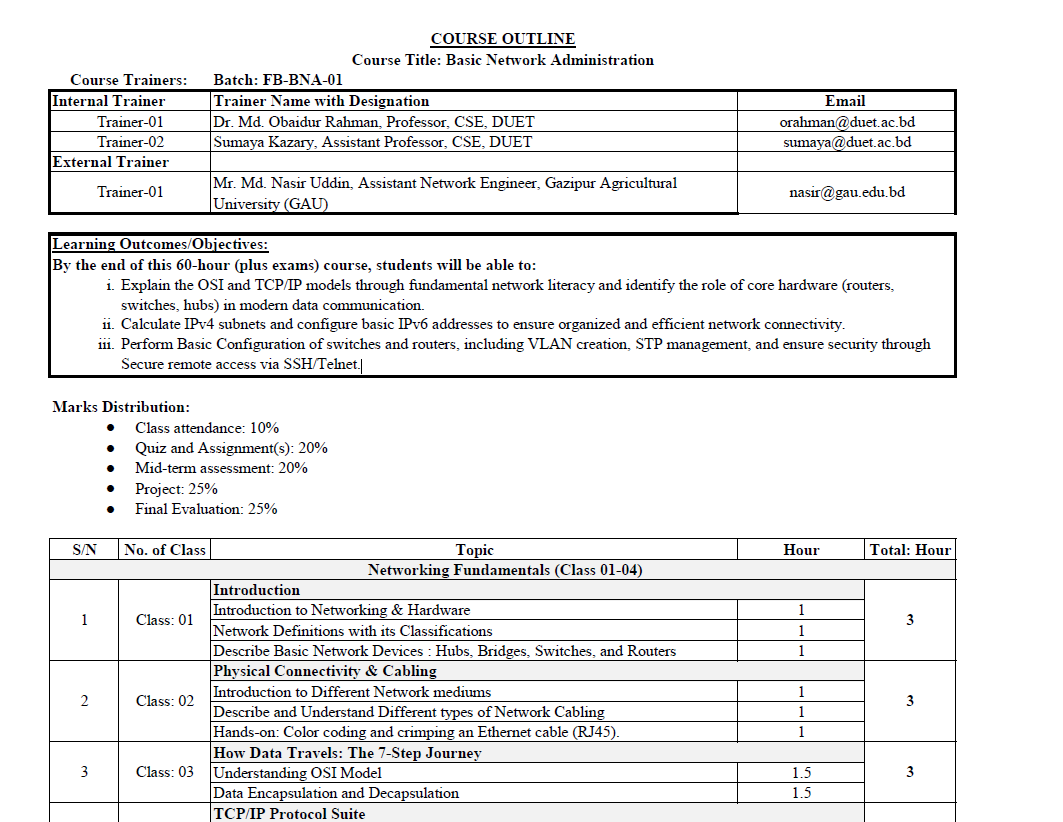
Learning Outcomes/Objectives: By the end of this 60-hour (plus exams) course, students will be able to: i. ii. iii. Marks Distribution: ● Class attendance: 10% ● Quiz and Assignment(s): 20% ● Mid-term assessment: 20% ● Project: 25% ● Final Evaluation: 25% S/N No. of Class Topic Hour Total: Hour Introduction to Networking & Hardware 1 Network Definitions with its Classifications 1 Describe Basic Network Devices : Hubs, Bridges, Switches, and Routers 1 Introduction to Different Network mediums 1 Describe and Understand Different types of Network Cabling 1 Hands-on: Color coding and crimping an Ethernet cable (RJ45). 1 Understanding OSI Model 1.5 Data Encapsulation and Decapsulation 1.5 Hands on Understanding of TCP/IP Layer 1.5 Comparison: OSI vs. TCP/IP model. 1.5 Network Simulator Installation 1.5 Network Simulator Configuration :Basic GUI navigation and adding devices 1.5 Binary vs. Decimal Number system 1 Understanding the Classful addressing (A, B, C, D, E) 1 Understanding the Fixed-Length Subnet Masking (FLSM) 0.5 Public vs. Private IP addresses 0.5 Understanding the Subnet & the Variable-length Subnet Mask (VLSM) 1.5 Practical subnetting exercises 1.5 Understanding IPv6 Address :Benefits, structure, and basic addressing 1 IPv6 Address Subnetting 1 Practical IPv6 Addressing and Subnetting exercises 1 Hands on Practice on IPv4 & IPv6 based Network Scenario with Subnetting 3 3 Theory (MCQ) Exam 1.5 Basic Simulation Lab 1.5 Describe Different Network Devices 1.5 Describe and Understand Different types of Network Cabling 1.5 Physical Connectivity & Cabling Class: 02 2 1 Class: 01 Networking Fundamentals (Class 01-04) Introduction 3 3 Class: 05 5 3 TCP/IP Protocol Suite Class: 04 4 3 IPv4 Addressing Fundamentals Class: 06 6 3 Simulation & Addressing (Class 05-10) Network Simulator Installation and Configuration 3 How Data Travels: The 7-Step Journey Class: 03 3 11 Class: 10 Overview of Network Devices and Cabling 9 Class: 09 Class: 11 IPv4 Subnetting Class: 07 7 Switching & Device Management (Class 11-17) 3 3 3 Mid-Term Examination (Exam 1) 3 10 Integrated Sunetting Lab IPv6 Address Subnetting 8 Class: 08 Explain the OSI and TCP/IP models through fundamental network literacy and identify the role of core hardware (routers, switches, hubs) in modern data communication. Calculate IPv4 subnets and configure basic IPv6 addresses to ensure organized and efficient network connectivity. Perform Basic Configuration of switches and routers, including VLAN creation, STP management, and ensure security through Secure remote access via SSH/Telnet.
Learning Outcomes/Objectives:
By the end of this 60-hour (plus exams) course, students will be able to:
i.
ii.
iii.
Marks Distribution:
●
Class attendance: 10%
●
Quiz and Assignment(s): 20%
●
Mid-term assessment: 20%
●
Project: 25%
●
Final Evaluation: 25%
S/N
No. of Class
Topic
Hour
Total: Hour
Introduction to Networking & Hardware
1
Network Definitions with its Classifications
1
Describe Basic Network Devices : Hubs, Bridges, Switches, and Routers
1
Introduction to Different Network mediums
1
Describe and Understand Different types of Network Cabling
1
Hands-on: Color coding and crimping an Ethernet cable (RJ45).
1
Understanding OSI Model
1.5
Data Encapsulation and Decapsulation
1.5
Hands on Understanding of TCP/IP Layer
1.5
Comparison: OSI vs. TCP/IP model.
1.5
Network Simulator Installation
1.5
Network Simulator Configuration :Basic GUI navigation and adding devices
1.5
Binary vs. Decimal Number system
1
Understanding the Classful addressing (A, B, C, D, E)
1
Understanding the Fixed-Length Subnet Masking (FLSM)
0.5
Public vs. Private IP addresses
0.5
Understanding the Subnet & the Variable-length Subnet Mask (VLSM)
1.5
Practical subnetting exercises
1.5
Understanding IPv6 Address :Benefits, structure, and basic addressing
1
IPv6 Address Subnetting
1
Practical IPv6 Addressing and Subnetting exercises
1
Hands on Practice on IPv4 & IPv6 based Network Scenario with Subnetting
3
3
Theory (MCQ) Exam
1.5
Basic Simulation Lab
1.5
Describe Different Network Devices
1.5
Describe and Understand Different types of Network Cabling
1.5
Physical Connectivity & Cabling
Class: 02
2
1
Class: 01
Networking Fundamentals (Class 01-04)
Introduction
3
3
Class: 05
5
3
TCP/IP Protocol Suite
Class: 04
4
3
IPv4 Addressing Fundamentals
Class: 06
6
3
Simulation & Addressing (Class 05-10)
Network Simulator Installation and Configuration
3
How Data Travels: The 7-Step Journey
Class: 03
3
11
Class: 10
Overview of Network Devices and Cabling
9
Class: 09
Class: 11
IPv4 Subnetting
Class: 07
7
Switching & Device Management (Class 11-17)
3
3
3
Mid-Term Examination (Exam 1)
3
10
Integrated Sunetting Lab
IPv6 Address Subnetting
8
Class: 08
Explain the OSI and TCP/IP models through fundamental network literacy and identify the role of core hardware (routers, switches, hubs) in modern data communication.
Calculate IPv4 subnets and configure basic IPv6 addresses to ensure organized and efficient network connectivity.
Perform Basic Configuration of switches and routers, including VLAN creation, STP management, and ensure security through Secure remote access via SSH/Telnet.